
Ohio Cannabis Retail Market Update – December 2025
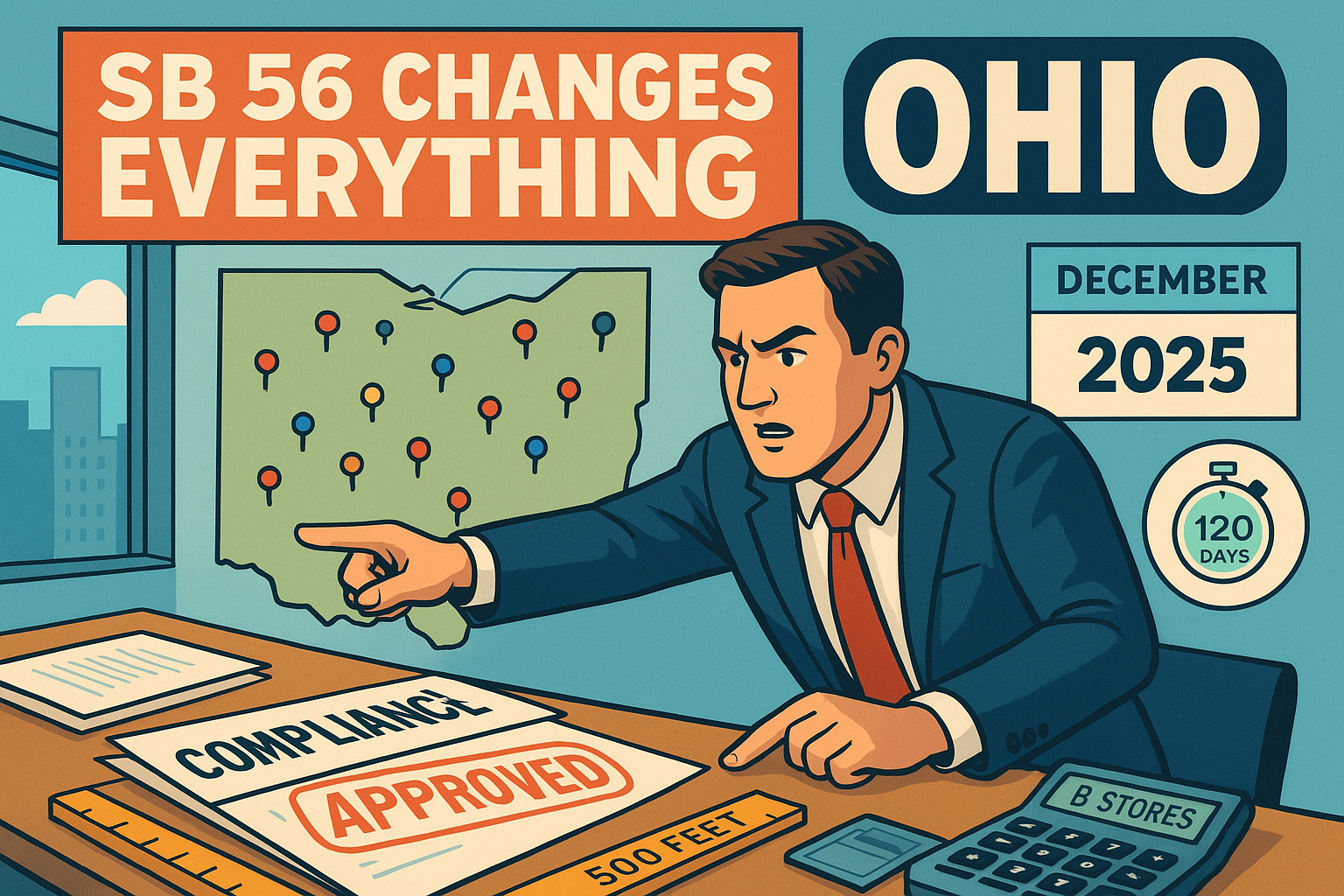
Ohio just rewrote its Ohio cannabis retail playbook overnight. Senate Bill 56, signed December 13, eliminates entire license classes, imposes strict one-mile spacing rules, and hands municipalities a 120-day decision window once licenses drop. Retailers now face an 8-dispensary ownership cap, mandatory 500-foot setbacks from schools and parks, and a ban on co-locating with any beer or liquor permit. Two cities extended moratoriums through 2026, and the state’s intoxicating hemp mess finally got regulatory teeth. If you’re planning expansion or entry, the next four months will determine which markets stay open and which lock out.
Plus we have 3 Ohio cannabis assets available for acquisition at the bottom of the email.
🌉 OHIO STATEWIDE – SB 56 OVERHAULS LICENSING AND SITING RULES
The Setup:
Governor DeWine signed Senate Bill 56 on December 13, 2025, enacting the most significant shift to Ohio’s cannabis retail framework since Issue 2 passed. The law eliminates Level III cultivators and 50 social equity dispensary licenses, caps ownership at 8 dispensaries per entity, requires 500-foot setbacks from schools and churches, mandates one-mile buffers between dispensaries, and bans dispensaries at any location holding a beer or liquor permit.
The Impact:
Retailers planning multi-location expansion just hit a hard ceiling at 8 stores. The one-mile spacing rule and alcohol-location ban will shrink viable site inventory in urban markets where beer permits are common. Municipalities get 120 days after license issuance to opt out, meaning councils will flood agendas with ordinances in Q1 2026. The Host Community Fund allocates 3.6% of adult-use tax revenue to cities with licensed dispensaries, creating financial incentive to stay opted in. Home grow legalization (6 plants per person, 12 per residence) may soften retail demand in markets without strong product differentiation.
The Opportunity:
Identify sites now that clear 500-foot setbacks, sit beyond one-mile rings from existing dispensaries, and carry no alcohol permits. Build relationships with municipal staff before the 120-day opt-out window opens because councils will face constituent pressure and need clear operational proposals. Target smaller cities eyeing Host Community Fund revenue but lacking local retail presence. For vertically integrated operators, the cultivator and processor caps (one each per entity) favor consolidation plays over greenfield builds.
Strategic Angle:
Map your target markets against the new setback and spacing rules before January 15. Cities will start posting opt-out ordinances within weeks of license issuance, and early site control wins in markets that stay open. Connect with zoning officials now to confirm buffer compliance because any delay past the 120-day window locks you out until the next cycle.
🏛️ ORRVILLE – MORATORIUM EXTENDED THROUGH DECEMBER 31, 2026
The Setup:
Orrville City Council passed Resolution 40-25, extending the city’s moratorium on issuing or processing permits for adult-use dispensaries, cultivators, and processors through December 31, 2026. The resolution maintains the city’s current prohibition status.
The Impact:
Orrville stays closed for another 13 months, pushing any potential retail opening into 2027 at earliest. Retailers targeting Wayne County will need to focus on surrounding jurisdictions. The extended timeline suggests council wants more data from neighboring markets before committing.
The Opportunity:
Monitor Orrville council agendas in Q4 2026 for opt-in signals as the moratorium expires. Use the interim to build community relationships and identify compliant sites. If neighboring cities show strong tax revenue from retail by mid-2026, Orrville may reconsider.
Strategic Angle:
Engage local business associations and chamber groups before Q3 2026. Councils considering opt-ins after long moratoriums respond to local economic arguments, and early community support shortens approval timelines once the ban lifts.
🏛️ EUCLID – 6-MONTH EMERGENCY MORATORIUM RENEWED
The Setup:
Euclid City Council passed Emergency Ordinance 92-2025, renewing a six-month moratorium on accepting or processing adult-use cannabis applications for retail, cultivation, and processing. The emergency designation allows immediate effect without standard reading periods.
The Impact:
Euclid remains closed through at least June 2025, with council retaining flexibility to extend again. The emergency renewal pattern signals ongoing hesitancy rather than permanent prohibition. Retailers targeting Cuyahoga County metro markets should prioritize Cleveland and nearby suburbs that have opted in.
The Opportunity:
Track Euclid’s renewal pattern closely because emergency moratoriums create shorter decision cycles than standard ordinances. If the city lets the ban lapse in mid-2025 without another extension, application windows open faster than in markets with multi-year prohibitions. Position sites near Euclid’s borders to serve the market from adjacent jurisdictions while monitoring council sentiment.
Strategic Angle:
Reach out to Euclid city planners in March 2025. Six-month emergency renewals often shift to permanent frameworks (opt-in or permanent ban) after 12-18 months, and early engagement helps shape zoning language if council moves toward permitting.
🏛️ OHIO LEGISLATURE – INTOXICATING HEMP FRAMEWORK ENACTED
The Setup:
Senate Bill 56 established a licensing system for intoxicating hemp retailers, imposed a 10% tax, prohibited sales to minors, and confined intoxicating hemp products to licensed dispensaries. A Franklin County judge temporarily blocked Governor DeWine’s executive ban in November, leaving sales legal until at least December 2, 2025, while the legislation advanced. The December 9 enactment resolves the regulatory gap.
The Impact:
Retailers with existing dispensary licenses can now sell intoxicating hemp products under the same compliance framework as traditional cannabis. Gas stations, convenience stores, and unlicensed retailers lose access to the category, funneling demand back to licensed operators. The 10% tax matches standard adult-use rates, avoiding pricing arbitrage between product lines. Retailers gain a differentiated product category without additional licensing burden.
The Opportunity:
Add intoxicating hemp SKUs to dispensary menus immediately to capture customers previously buying from unlicensed retailers. Educate budtenders on product distinctions and effects because consumer confusion between delta-8, delta-9, and hemp-derived products remains high. Use the category to drive trial among customers hesitant about traditional THC products.
Strategic Angle:
Source compliant intoxicating hemp products before January 31. The regulatory shift will create short-term supply constraints as unlicensed retailers exit and licensed operators scale inventory. Early movers secure better supplier terms and capture market share during the transition.
💼 THIS MONTH’S OHIO CANNABIS DEALSNortheast Ohio – High-Performing Retail Location Asking: $15,000,000
Ohio – 3-Store Retail Portfolio + Tier 2 Cultivation License Asking: $18,000,000 (package only)
Northeast Ohio – Established Retail Store Asking: $4,250,000
Interested in learning more about these opportunities? Reply to this email or contact us directly. |
The Bottom Line
Ohio cannabis retail operators face a compressed action window in Q1 2026. Senate Bill 56’s 8-dispensary cap and one-mile spacing rules shrink expansion opportunities, while 120-day municipal opt-out timelines will flood council agendas with ordinances once licenses issue. Orrville and Euclid stay closed into 2026, but intoxicating hemp regulation hands licensed retailers a new product category and eliminates unlicensed competition. Secure compliant sites now, map setback and spacing compliance before licenses drop, and connect with municipal staff in target markets before opt-out windows open. Early site control and council relationships win in the new Ohio cannabis retail landscape.
📬 Get Monthly Market Updates
Stay ahead of the curve with our monthly cannabis retail market newsletter. New markets, regulatory changes, and expansion opportunities delivered to your inbox.