NATIONAL CANNABIS RETAIL MARKET UPDATE – JANUARY 2026
Welcome to the first national monthly puff of the year, where we take you around the US and share the most important cannabis updates.
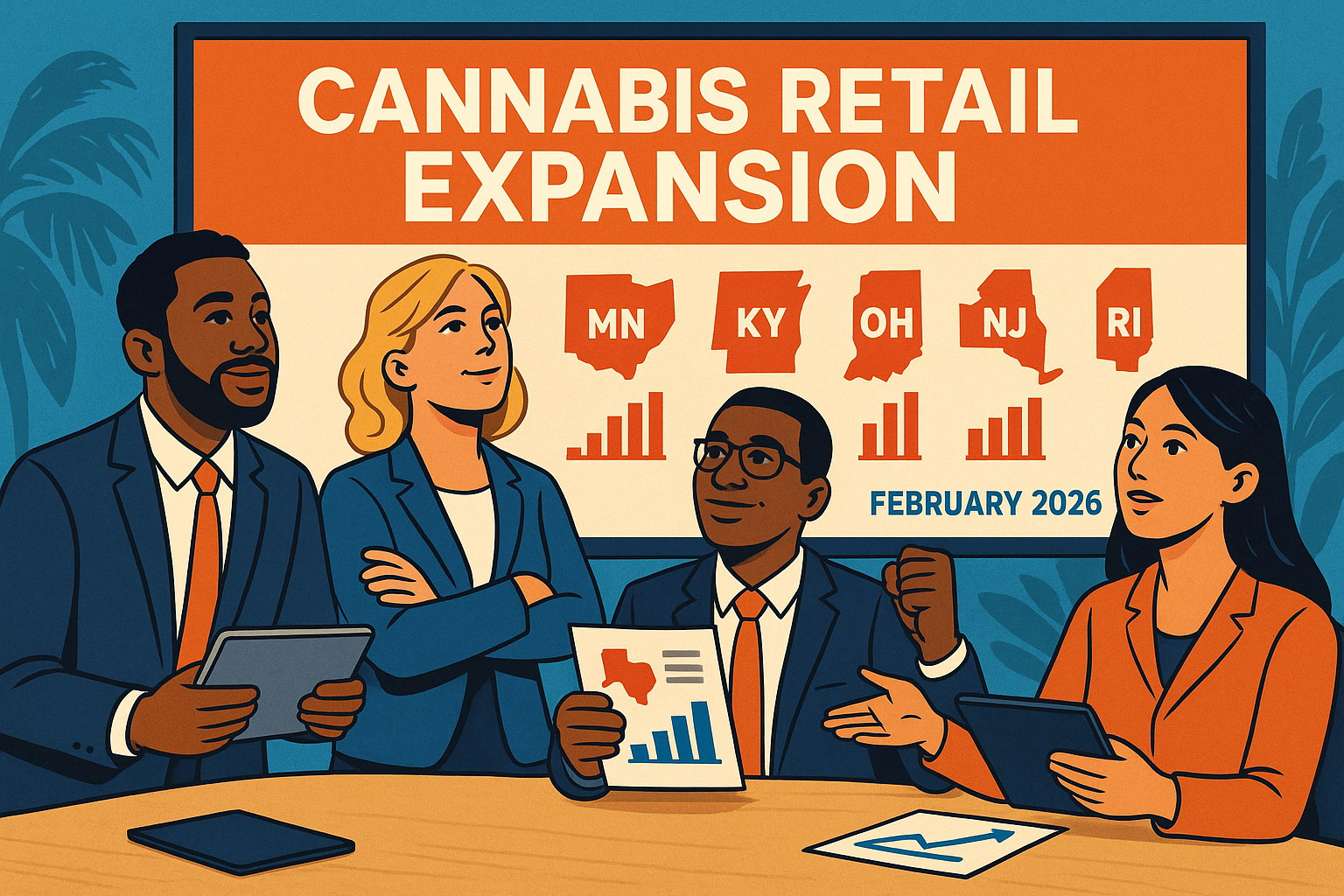
January 2026 cannabis state launches are accelerating nationwide as Minnesota, Rhode Island, and New Jersey expand retail frameworks while Michigan faces immediate cost pressure and Ohio rewrites statewide rules. Minnesota’s tribal compacts unlock eight off-reservation dispensary locations and wholesale distribution across the state, Rhode Island closes its application window with March deadlines ahead, and New Jersey opens social consumption sites while consolidating hemp sales to licensed retailers by April. Michigan starts the year under a 24% wholesale tax that hits margins immediately, Ohio imposes strict one-mile spacing rules and eight-dispensary ownership caps, and smaller markets from Kentucky to Nebraska are advancing first-time retail frameworks.
Retailers evaluating state-level expansion need to prioritize Minnesota’s lottery windows, New Jersey’s consumption licensing, and Ohio’s compressed site selection timeline before municipal opt-out periods close. Illinois channels hemp sales to dispensaries, Florida voters watch the Smart & Safe ballot, and Arizona quietly loosens zoning restrictions in Phoenix. The next 90 days determine which state markets reward early movers and which lock out late entrants.
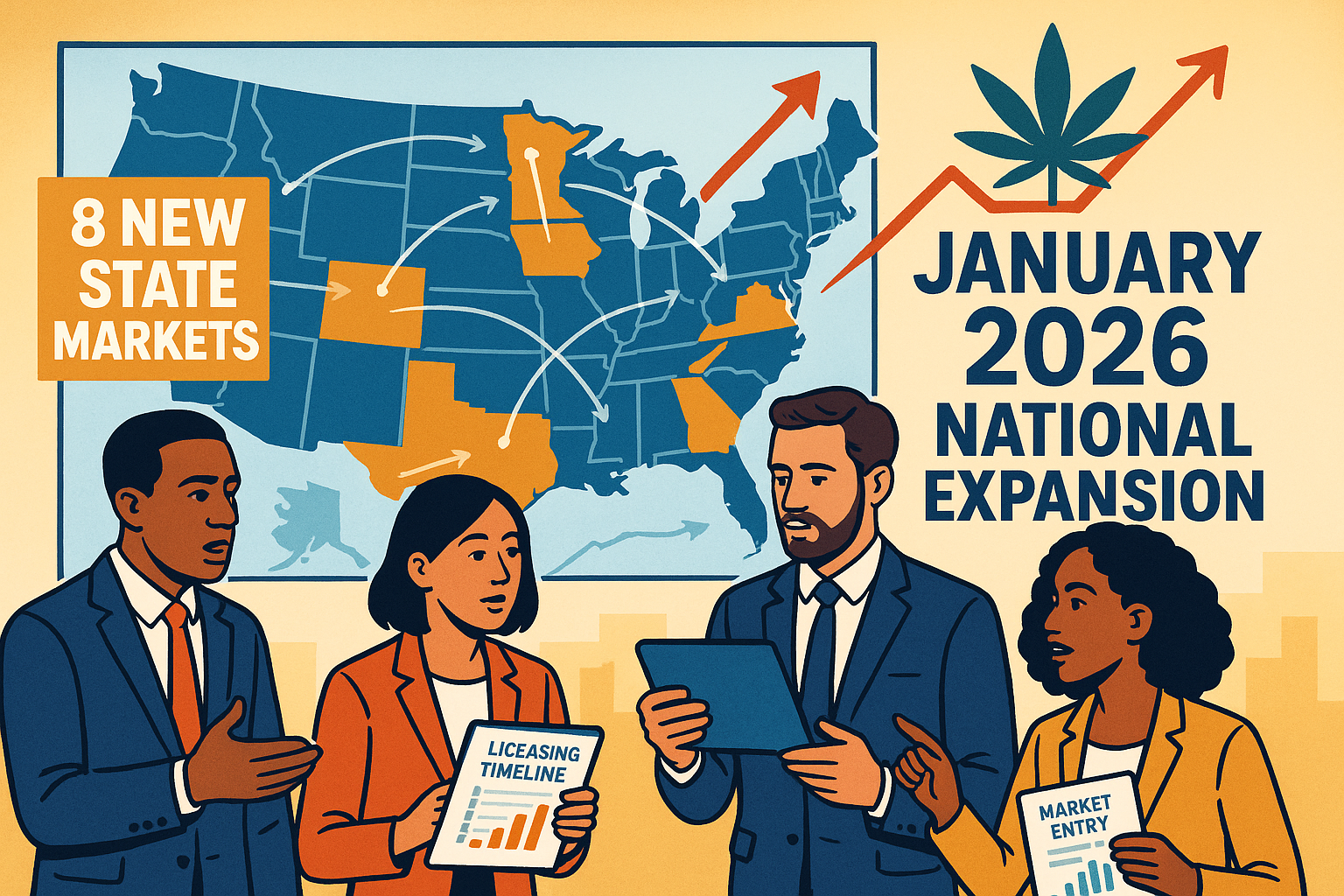
🆕 NEW STATE MARKETS OPENING:
- Minnesota – Tribal compacts enable 8 off-reservation locations, Brooklyn Center lottery
- Nebraska – Omaha Tribe finalizes first legal cannabis retail regulations
- Rhode Island – State application window closed, March licensing deadline active
Top Headlines This Month
- 🆕 Minnesota tribal compacts unlock 8 dispensary locations statewide
- 🆕 Rhode Island application deadline passes, March review begins
- 🆕 Nebraska Omaha Tribe launches first state retail market
- New Jersey social consumption sites open January 2
- Michigan 24% wholesale tax takes effect despite court challenge
- Ohio Senate Bill 56 imposes strict state spacing rules
- Illinois Chicago channels hemp sales to licensed retailers
- Kentucky federal hemp cap threatens state supply chains
🆕 MINNESOTA – NEW STATE MARKET – TRIBAL COMPACTS UNLOCK STATEWIDE WHOLESALE AND RETAIL
The Setup:
Minnesota cannabis market signed cannabis compacts with Red Lake Nation and Bois Forte Band in December 2025, authorizing tribal cannabis enterprises to operate up to eight off-reservation dispensaries statewide. Red Lake’s compact specifically names Thief River Falls and West St. Paul as initial retail locations. Governor Tim Walz signed a second cooperative agreement on December 18, 2025, enabling Red Lake Nation to supply cannabis products to all state-licensed retailers as a wholesale distributor.
The Impact:
Ground-floor opportunity in newly launching state program. These compacts create an entirely new retail channel outside Minnesota’s municipal licensing framework. Each tribe can operate eight dispensaries total, with a maximum of one per city and three per county. Red Lake Nation now functions as both retailer and wholesale supplier, giving state-licensed dispensaries immediate access to tribally produced inventory. This addresses the cultivation capacity lag OCM flagged as a market instability risk. Thief River Falls and West St. Paul become active Minnesota cannabis retail markets without traditional municipal opt-in processes. State-licensed retailers can now source from tribal producers under state regulatory oversight, potentially diversifying supply and reducing dependence on in-state cultivators.
The Opportunity:
Thief River Falls (population ~9,000) and West St. Paul (population ~20,000) had zero licensed retail before these compacts. Tribal operations will establish brand recognition and customer habits before any competing state-licensed retailers can enter. For existing Minnesota cannabis retail license holders, Red Lake’s wholesale role solves immediate supply shortages and provides product diversity during the cultivation buildout phase. Retailers should reach out to Red Lake Nation’s cannabis division now to secure supply agreements before tribal product allocation fills up. Brooklyn Center launches its first cannabis retail registration lottery in January 2026, creating structured entry into a 31,000-population market with zero current dispensaries.
Strategic Angle:
Contact Red Lake Nation cannabis operations this month to discuss wholesale supply terms and availability before Q2. Early partnerships lock in product access and favorable pricing before demand spikes. If you’re eyeing Thief River Falls or West St. Paul for state-licensed retail, understand that tribal stores will set local market expectations. Submit Brooklyn Center local registration applications before mid-January to ensure lottery eligibility.
🆕 RHODE ISLAND – NEW STATE MARKET – APPLICATION DEADLINE CLOSED, MARCH LICENSING TIMELINE ACTIVE
The Setup:
Rhode Island’s retail cannabis license application window closed Monday, December 29, 2025. The Cannabis Control Commission extended the deadline for all adult-use retail license applicants to provide evidence of final zoning approval to March 1, 2026. Complete applications must be submitted by December 29, 2025, but applicants have until March 1, 2026 to secure final zoning permits. The state is reviewing 100+ applications for 24 adult-use retail licenses with decisions expected by May 2026.
The Impact:
Ground-floor opportunity in newly launching state program. Rhode Island cannabis retail is accelerating with three cities voting on retail zoning this month, North Kingstown deciding a storefront approval, and the state’s March 1 final zoning deadline that could impact applicants competing for 24 adult-use licenses. Pawtucket City Council holds a public hearing January 7, 2026 on a zoning amendment to allow adult-use cannabis retail in Industrial Open and Industrial Built-Up zones. Coventry Town Council schedules a January 13, 2026 public hearing on allowing retail cannabis in General Business zones. The state approved a social consumption framework set to launch this year, opening adjacent revenue streams for retailers in opt-in municipalities.
The Opportunity:
The March 1 deadline is a hard cutoff for zoning compliance. If applicants cannot secure final zoning approval by this date, their applications are disqualified. With 100+ applicants competing for 24 licenses, any disqualification improves remaining applicants’ odds. This extended timeline helps social equity and worker cooperative applicants who may lack resources to secure early zoning approvals. Pawtucket (population 75,000) is the fourth-largest city in Rhode Island with zero retail cannabis access. Coventry sits between Providence and Connecticut, capturing I-95 corridor traffic. Social consumption licensing creates second revenue channel for existing dispensaries without requiring separate retail licenses.
Strategic Angle:
Confirm zoning approvals by February 15 if you’re an applicant. Don’t wait until March 1. Municipal processing delays or missing documentation can kill applications. Early confirmation gives time to fix errors before the deadline. Contact Pawtucket and Coventry property owners before hearings to secure site control in newly opening markets.
🆕 NEBRASKA – NEW STATE MARKET – OMAHA TRIBE FINALIZES FIRST LEGAL CANNABIS RETAIL REGULATIONS
The Setup:
The Omaha Tribe Cannabis Commission approved comprehensive retail regulations on November 19, 2025, establishing a full licensing framework for medical cannabis sales on tribal lands. Commercial license applications are expected to open in late 2025 or early Q1 2026, with the first tribal dispensary projected to open by early 2026. Governor Pillen appointed two new members to the Nebraska Medical Cannabis Commission on November 17, 2025, filling recent vacancies.
The Impact:
Ground-floor opportunity in newly launching state program. This creates Nebraska’s first legal cannabis retail market, operating independently of state law. The tribe established seven license categories with preferential treatment for enrolled tribal members and tribal enterprises, but non-tribal entities can apply if they submit to tribal jurisdiction. Mandatory seed-to-sale tracking, 24-hour video surveillance, and ISO/IEC 17025 certified lab testing set high compliance standards that mirror mature state programs. The Omaha Tribe’s reservation serves northeastern Nebraska and western Iowa populations with zero existing legal cannabis access. State medical dispensary licensing remains pending with no clear timeline, but the December 2 NMCC meeting focused on manufacturing rather than retail.
The Opportunity:
Non-tribal operators willing to submit to tribal jurisdiction and partner with tribal members can compete for licenses across cultivation, processing, testing, transportation, and retail categories. First movers will capture brand recognition in a market serving patients and consumers with no local competition. The tribe’s social equity focus and member preference mean partnership strategies matter more than capital alone. State medical dispensary licensing will eventually open, but the timeline remains uncertain – expect Q2 2026 or later for retail licensing to begin.
Strategic Angle:
Reach out to the Omaha Cannabis Regulatory Commission before year-end to express interest and understand application requirements. Tribal markets reward early relationship-building and demonstrated commitment to community benefit. Track the December 2 NMCC meeting agenda and minutes within 48 hours of publication for signals on state dispensary application windows.
🌉 NEW JERSEY – SOCIAL CONSUMPTION SITES AND HEMP CONSOLIDATION RESHAPE STATE MARKET
The Setup:
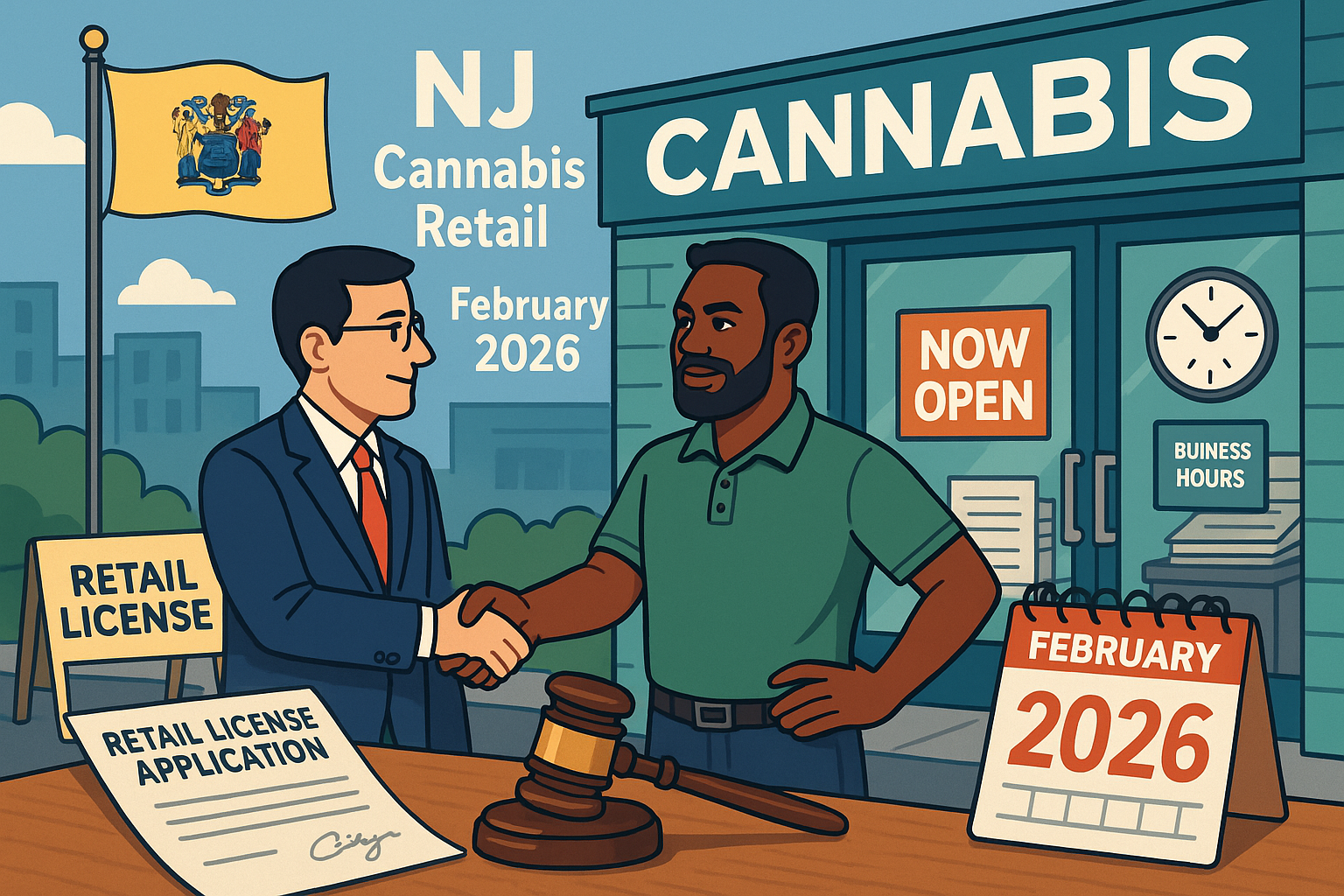
New Jersey Cannabis Regulatory Commission approved social consumption regulations on December 21, 2025, with applications opening January 2, 2026. Three license types are now available: supplemental licenses for existing dispensaries to add on-site consumption, hospitality licenses for non-cannabis businesses, and event organizer licenses for temporary gatherings. Senate Bill S-4509 passed both chambers on December 22, 2025, capping hemp-derived THC at 0.4 mg per container and requiring products above 0.3% total THC to be sold exclusively by CRC-licensed cannabis retailers. Existing hemp inventory can be liquidated until March 13, 2026. Hamilton Township adopted Ordinance 2120-2025 on January 9, creating a site-specific redevelopment overlay zone that permits Class 5 retail cannabis establishments with drive-through service.
The Impact:
This creates a second revenue channel for existing dispensaries without requiring a second retail license. Retailers who secure supplemental licenses can capture on-site sales and extend customer dwell time. Social consumption lounges typically generate 20-30% higher per-customer revenue than retail-only models. CRC retailers gain exclusive access to a product category that was generating retail sales outside the regulated system, expanding their addressable market without additional licensing. Convenience stores, smoke shops, and liquor stores lose access to higher-THC hemp products by mid-March, redirecting those customers to dispensaries. Hamilton Township is the latest New Jersey municipality to explicitly permit drive-through cannabis service, setting a precedent for other jurisdictions weighing convenience-focused models.
The Opportunity:
Existing CRC retailers in cannabis-friendly municipalities should file supplemental license applications immediately to secure on-site consumption rights before hospitality competitors enter. Target towns with established cannabis support, walkable downtowns, and hospitality infrastructure. Secure supplier relationships now for compliant hemp-derived products that meet the 0.4 mg THC cap. Retailers who build hemp product lines before the March deadline will attract customers migrating from non-licensed channels. Operators in adjacent Mercer County municipalities should pitch drive-through models to local planning boards, citing Hamilton’s framework as a working precedent.
Strategic Angle:
File supplemental license applications with the CRC before March. Early filers position themselves as category leaders when regulations fully roll out. Contact hemp product distributors before February to lock in supply agreements. Reach out to Hamilton Township planning staff before February to understand application volume and site availability.
💰 MICHIGAN – 24% WHOLESALE TAX TAKES EFFECT DESPITE INDUSTRY APPEALS
The Setup:
A judge denied the industry’s request for a preliminary injunction on December 20, clearing the path for the 24% wholesale tax to begin January 1, 2026. The tax remains in place while litigation continues. House Bills 5442, 5443, and 5444 propose capping provisioning centers at one per 5,000 residents starting January 1, 2026. The Pokagon Band of Potawatomi Indians signed the state’s second tribal-state cannabis compact on December 18, integrating Rolling Embers retail into the licensed market.
The Impact:
This tax hits cost of goods immediately. Wholesale prices rise 24% on January 1, squeezing margins unless you pass costs to consumers and risk volume drops. Early reports show facilities closing and customers hoarding inventory before the tax kicks in. If passed, the one-per-5,000 cap would freeze most Michigan cannabis retail expansion in saturated markets and redirect competition to underserved jurisdictions. Rolling Embers can now source from and sell to state-licensed operators, expanding both supply chain options and competitive reach.
The Opportunity:
Retailers with strong supplier relationships can negotiate cost-sharing arrangements or lock in pre-tax pricing for early January deliveries. Operators holding licenses in markets near the cap threshold should prioritize operational improvements and customer retention. State-licensed retailers can explore supply agreements or distribution partnerships with tribal operators to diversify sourcing and access unique product lines.
Strategic Angle:
Renegotiate supplier contracts before January 15. Lock in cost-sharing terms or volume discounts that offset part of the 24% increase. Identify underserved jurisdictions below the 5,000-resident threshold before February if the cap passes. Reach out to tribal economic development offices before March to position ahead of competitors once additional compacts are signed.
🏛️ OHIO – SENATE BILL 56 REWRITES STATEWIDE LICENSING AND SITING RULES
The Setup:
Governor DeWine signed Senate Bill 56 on December 19, 2025, enacting the most significant shift to Ohio’s cannabis retail framework since Issue 2 passed. The law eliminates Level III cultivators and 50 social equity dispensary licenses, caps ownership at 8 dispensaries per entity, requires 500-foot setbacks from schools and churches, mandates one-mile buffers between dispensaries, and bans dispensaries at any location holding a beer or liquor permit. Senate Bill 56 established a licensing system for intoxicating hemp retailers, imposed a 10% tax, and confined intoxicating hemp products to licensed dispensaries.
The Impact:
Retailers planning multi-location expansion just hit a hard ceiling at 8 stores. The one-mile spacing rule and alcohol-location ban will shrink viable site inventory in urban markets where beer permits are common. Municipalities get 120 days after license issuance to opt out, meaning councils will flood agendas with ordinances in Q1 2026. Retailers with existing dispensary licenses can now sell intoxicating hemp products under the same compliance framework as traditional cannabis. Gas stations, convenience stores, and unlicensed retailers lose access to the category, funneling demand back to licensed operators.
The Opportunity:
Identify sites now that clear 500-foot setbacks, sit beyond one-mile rings from existing dispensaries, and carry no alcohol permits. Build relationships with municipal staff before the 120-day opt-out window opens. Target smaller cities eyeing Host Community Fund revenue but lacking local retail presence. Add intoxicating hemp SKUs to dispensary menus immediately to capture customers previously buying from unlicensed retailers.
Strategic Angle:
Map your target markets against the new setback and spacing rules before January 15. Cities will start posting opt-out ordinances within weeks of license issuance, and early site control wins in markets that stay open. Source compliant intoxicating hemp products before January 31 to secure better supplier terms and capture market share during the transition.
🏛️ ILLINOIS – CHICAGO COMMITTEE ADVANCES HEMP SALES RESTRICTION TO LICENSED RETAILERS
The Setup:
Chicago’s Committee on License and Consumer Protection voted 10-6 on December 3 to advance an ordinance restricting sales of hemp-derived intoxicating cannabinoid products (delta-8 THC, HHC) to state-licensed cannabis retailers only. A full City Council vote is expected next. Rochelle’s Planning & Zoning Commission held a public hearing and action session on December 1 for a special use petition from Stash Holdings Corp. to operate an adult-use cannabis infuser organization at 600 N. 15th Street.
The Impact:
This consolidates hemp-derived intoxicant sales into the licensed dispensary channel, removing unregulated outlets from the market. Dispensaries gain exclusive access to a product category that has been siphoning customers to gas stations, smoke shops, and convenience stores. Expect increased foot traffic, expanded SKU opportunities, and a cleaner competitive landscape. Infuser operations expand the supply chain infrastructure in smaller Illinois markets, creating potential partnership opportunities for retailers seeking locally produced edibles and concentrates.
The Opportunity:
Chicago dispensaries should prepare for expanded hemp-derived product lines and marketing angles that emphasize safety, compliance, and product testing compared to unregulated sources. Budget for inventory expansion and staff training on hemp-derived cannabinoids. Retailers looking to diversify supplier relationships should track Rochelle’s infuser approval process. Local infusers typically offer faster turnaround, custom product runs, and lower minimum order quantities compared to large-scale producers.
Strategic Angle:
Connect with your product suppliers before the full Council vote. Locking in hemp-derived SKU agreements early positions you ahead of competitors when the ordinance takes effect. Reach out to Michelle Knight at mknight@rochelleil.us to confirm Rochelle’s Commission decision and timeline for operational launch.
🏛️ KENTUCKY – FEDERAL HEMP THC CAP THREATENS STATE RETAIL SUPPLY CHAINS
The Setup:
On November 17, 2025, Congress enacted a 0.4 milligrams-per-container THC limit for hemp-derived products, replacing the previous 0.3% delta-9 by weight standard. Senator Rand Paul announced on November 24, 2025, that he will introduce federal legislation allowing states to exempt themselves from the new hemp THC cap. Kentucky’s Cabinet for Health and Family Services held a public hearing on November 24, 2025, on 902 KAR 55:015, a draft regulation updating controlled substance schedules that explicitly exempts medical cannabis from Schedule I enforcement.
The Impact:
Retailers planning Kentucky medical cannabis operations face immediate inventory and sourcing challenges. The per-container cap eliminates most hemp-derived products currently on shelves, creating uncertainty about compliant product availability and vendor relationships. Licensed medical dispensaries may gain competitive advantage as hemp retailers exit, but supply chain disruptions could delay product launches. Passage of Senator Paul’s exemption bill would restore Kentucky’s regulatory autonomy and prevent hemp business closures, stabilizing product availability.
The Opportunity:
Medical cannabis retailers can capture market share as hemp competitors close. Secure vendor agreements now with manufacturers pivoting to medical-only production. Identify product gaps where hemp exits create demand for licensed alternatives. Use the CHFS exemption language to reassure investors and lenders that Kentucky medical cannabis licenses carry stable regulatory footing.
Strategic Angle:
Reach out to Kentucky hemp vendors before year-end. Companies facing closure may sell equipment, transfer licenses, or partner on medical transitions. Track Senate floor activity in Q1 2026 for early signals on bill momentum. Include the CHFS exemption text in your Kentucky market entry presentations.
🏛️ FLORIDA – SMART & SAFE ADULT-USE BALLOT CLEARS SUPREME COURT REVIEW
The Setup:
The Smart & Safe Florida initiative met signature thresholds and advanced to Florida Supreme Court ballot language review on November 18-19, 2025. HB 7029 becomes law January 1, 2026, imposing a 15% excise tax on hemp-derived THC retail sales, restricting sales to Department of Agriculture and Consumer Services-licensed food establishments, and banning gas stations, smoke shops, and convenience stores from selling hemp products.
The Impact:
Florida cannabis retail could see its biggest expansion in a decade if Smart & Safe passes in 2026. The local opt-in requirement means cities and counties must affirmatively allow adult-use retail, creating a patchwork of opening markets. Thousands of Florida cannabis retail locations currently selling hemp products in gas stations, smoke shops, and convenience stores lose legal authority to stock those items starting January 1. Only DACS-licensed food establishments retain hemp retail rights after January 1.
The Opportunity:
If Smart & Safe reaches the ballot and polling shows strong support, retailers should begin opt-in jurisdiction mapping now. Identify cities and counties with pro-cannabis council majorities. Florida cannabis retail operators with DACS food establishment licenses can capture displaced volume from eliminated channels. The 500-foot buffer and testing requirements create barriers to entry that protect compliant operators.
Strategic Angle:
Start building relationships with city councils in target markets now, before the ballot goes live. Secure DACS food establishment licensing before December 31 if you want to stay in hemp retail. Operators who convert in time will face zero competition from gas stations and smoke shops starting January 1.
🏛️ ARIZONA – PHOENIX ZONING OFFICER APPROVES FOUR DISPENSARY VARIANCES
The Setup:
Phoenix’s Zoning Adjustment Hearing Officer approved four medical marijuana dispensary requests on December 11, granting variances that reduce facility separation requirements from 5,280 feet (one mile) to 800 feet, allow locations within 1,320 feet of public parks, and permit sites within 500 feet of residential zones.
The Impact:
These approvals break the typical one-mile separation stranglehold that limits site selection in dense urban markets. The 800-foot variance opens up previously off-limits corridors, while the park proximity waiver and residential zone allowance expand available real estate. Operators can now consider high-traffic commercial areas previously blocked by overlapping buffer zones.
The Opportunity:
Phoenix’s willingness to grant separation variances creates immediate site acquisition plays in commercial corridors where multiple dispensaries already cluster. Target locations near existing retail that fell just outside prior buffer zones, and properties near parks or residential boundaries with strong visibility.
Strategic Angle:
Map Phoenix neighborhoods where 800-foot separations would unlock 3-5 new qualifying sites before Q1 2026. Reach out to Phoenix Planning before year-end to discuss site-specific variance prospects while this approval pattern holds.
The Bottom Line
January 2026 cannabis state launches bring Minnesota tribal wholesale, Rhode Island application reviews, and New Jersey consumption site licensing while Michigan faces immediate 24% tax pressure and Ohio imposes strict statewide spacing rules. Minnesota’s Red Lake Nation compact unlocks eight off-reservation dispensary locations and wholesale distribution across the state, creating ground-floor opportunities in Thief River Falls and West St. Paul. Rhode Island’s March 1 zoning deadline separates prepared applicants from those lacking proper planning, while Pawtucket and Coventry open new municipal markets. New Jersey retailers gain social consumption revenue streams starting January 2 and exclusive hemp sales access by March 13, with Hamilton Township approving a drive-through dispensary model. Michigan operators must renegotiate supplier contracts immediately to absorb the 24% wholesale tax hit, while Ohio retailers face compressed site selection timelines before municipal opt-out windows close. Illinois consolidates Chicago hemp sales to licensed dispensaries, Kentucky navigates federal hemp cap disruption, Florida voters watch Smart & Safe ballot progress, and Arizona loosens Phoenix zoning restrictions. The next 90 days determine which state markets reward early movers and which lock out late entrants – prioritize Minnesota lottery applications, New Jersey consumption licensing, Ohio site compliance mapping, and Rhode Island zoning confirmations before February deadlines eliminate market access windows.
📬 Get Monthly Market Updates
Stay ahead of the curve with our monthly cannabis retail market newsletter. New markets, regulatory changes, and expansion opportunities delivered to your inbox.