NATIONAL CANNABIS RETAIL MARKET UPDATE – JANUARY 2026
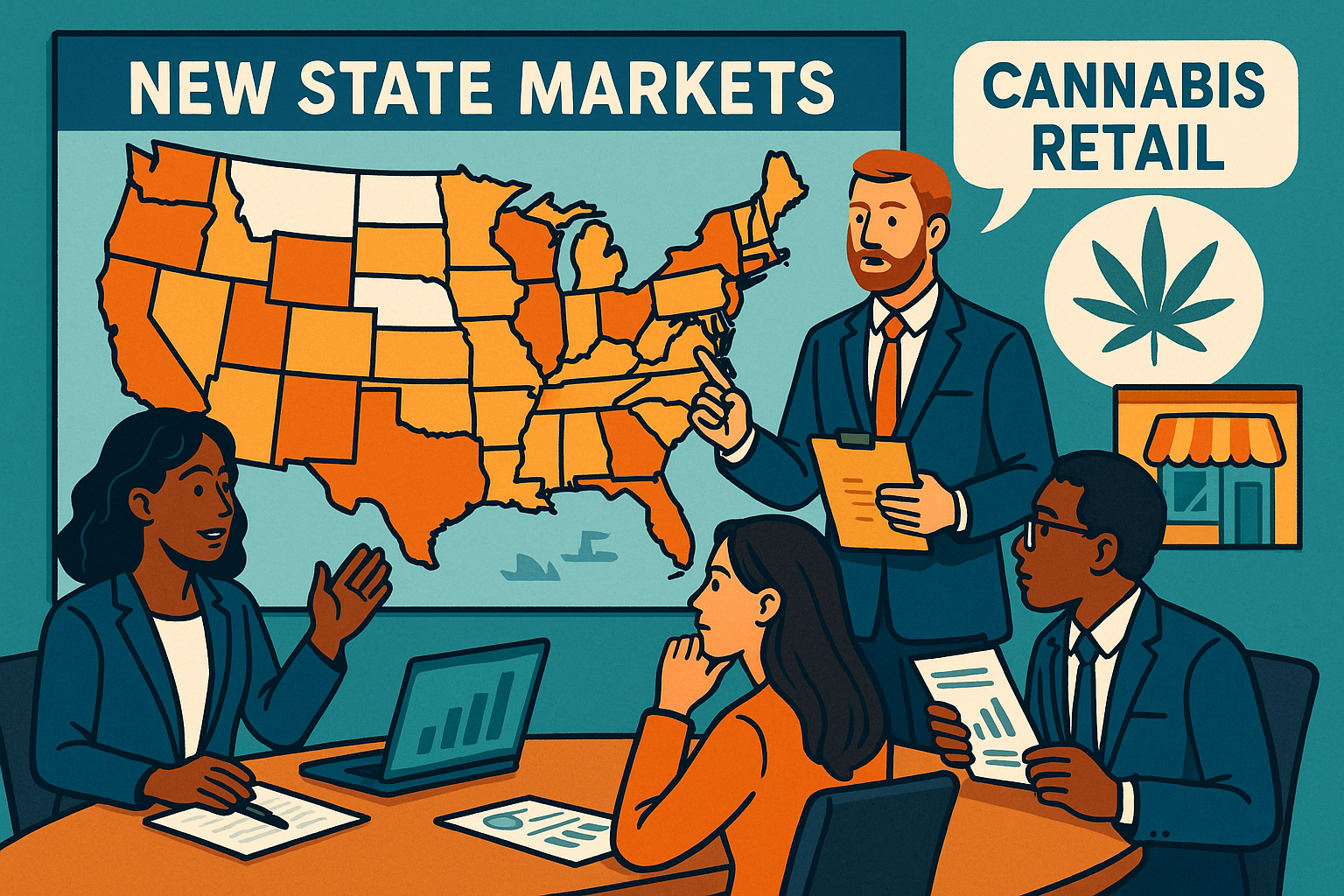
January 2026 cannabis state updates reveal accelerating momentum across Minnesota, New Jersey, Rhode Island, Kentucky, and Nebraska as regulatory frameworks mature and new retail pathways open.
Minnesota’s tribal-state compacts unlock statewide wholesale distribution while Brooklyn Center launches its first retail lottery.
New Jersey cannabis market activates social consumption sites January 2 and consolidates intoxicating hemp sales to licensed retailers by April.
Rhode Island dispensary licensing sets a March 1 final zoning deadline for 24 adult-use licenses as three municipalities vote on retail frameworks this month.
Kentucky’s cannabis beverage market completed its regulatory transition on January 1 as the temporary event sales exception expired.
Nebraska prepares for the Omaha Tribe’s groundbreaking retail launch.
For investors and retailers evaluating state-level opportunities, many emerging state programs are moving from planning to operational reality.
Top Headlines This Month
- Minnesota tribal compacts authorize 8 off-reservation dispensaries plus statewide wholesale
- New Jersey social consumption sites launch January 2 with three license types
- Rhode Island sets March 1 zoning deadline for 24 retail licenses
- Nebraska’s Omaha Tribe prepares first legal cannabis retail operation
- Kentucky completes cannabis beverage regulatory framework transition January 1
- Minnesota’s Brooklyn Center launches first municipal retail lottery
- New Jersey channels intoxicating hemp sales to CRC retailers by April
- Rhode Island municipalities vote on retail zoning frameworks this month
🌉 MINNESOTA – TRIBAL COMPACTS RESHAPE STATEWIDE CANNABIS RETAIL LANDSCAPE
The Setup:
Minnesota cannabis retail signed compacts with Red Lake Nation (December 15, 2025) and Bois Forte Band of Chippewa (December 2025), authorizing tribal cannabis enterprises to operate up to eight off-reservation dispensaries statewide. Red Lake’s compact specifically names Thief River Falls and West St. Paul as initial retail locations. Governor Tim Walz signed a second cooperative agreement on December 18, 2025, enabling Red Lake Nation to supply cannabis products to all state-licensed retailers as a wholesale distributor.
The Impact:
These compacts create an entirely new retail channel outside Minnesota’s municipal licensing framework and solve the cultivation capacity gap that state regulators flagged as a market instability risk. Each tribe can operate eight dispensaries total (maximum one per city, three per county), while Red Lake Nation now functions as both retailer and wholesale supplier to the entire state-licensed market. Thief River Falls and West St. Paul become active cannabis retail markets without traditional municipal opt-in processes. The Minnesota Office of Cannabis Management’s December warnings about rapid expansion and oversaturation make Red Lake’s wholesale role critical for supply chain stability.
The Opportunity:
Existing Minnesota cannabis retail license holders should reach out to Red Lake Nation’s cannabis division immediately to secure wholesale supply agreements before tribal product allocation fills up. This addresses near-term inventory shortages and provides product diversity during the cultivation buildout phase. Retailers planning state-licensed operations in Thief River Falls or West St. Paul must understand that tribal stores will establish brand recognition and customer habits first, requiring clear differentiation strategies from day one. Brooklyn Center’s January retail lottery and Goodhue County’s three remaining registration slots represent parallel opportunities in the state’s evolving market structure.
Strategic Angle:
Contact Red Lake Nation cannabis operations this month to discuss wholesale supply terms and availability. Early partnerships lock in product access and favorable pricing before demand spikes. For emerging markets, prioritize Greater Minnesota counties with fewer than two existing dispensaries per 20,000 residents to avoid the oversaturation risks OCM highlighted. Douglas County’s January 6 vote on retail registration caps demonstrates how quickly market windows can close.
🌉 NEW JERSEY – SOCIAL CONSUMPTION SITES LAUNCH JANUARY 2 WITH EXPANDED REVENUE CHANNELS
The Setup:
The New Jersey Cannabis Regulatory Commission approved social consumption regulations on December 21, 2025, with promulgation set for January 2, 2026. Three license types are now available: supplemental licenses for existing dispensaries to add on-site consumption, hospitality licenses for non-cannabis businesses, and event organizer licenses for temporary gatherings. Food service is mandatory, alcohol sales are banned in consumption areas, and municipalities must opt in. Social equity and economically disadvantaged area businesses can apply January 2, microbusinesses and diversely-owned operators April 2, and all other applicants July 2.
The Impact:
This creates a second revenue channel for New Jersey’s 120+ operating dispensaries without requiring separate retail licenses, while simultaneously channeling intoxicating hemp products exclusively to CRC-licensed retailers by April 13, 2026. Senate Bill S-4509 (passed December 22, 2025, awaiting Governor’s signature) caps hemp-derived THC at 0.4 mg per container and forces products exceeding 0.3% total THC into the licensed cannabis channel. Convenience stores, smoke shops, and liquor stores lose access to higher-THC hemp products by mid-April, redirecting those customers to dispensaries. Consumption lounges typically generate 20-30% higher per-customer revenue than retail-only models.
The Opportunity:
Existing CRC retailers in cannabis-friendly municipalities should file supplemental license applications immediately to secure on-site consumption rights before hospitality competitors enter. Target towns with established cannabis support, walkable downtowns, and hospitality infrastructure. Simultaneously, secure supplier relationships now for compliant hemp-derived products that meet the 0.4 mg THC cap. Retailers who launch hemp product lines by March and consumption sites by Q2 will capture market share from competitors still navigating municipal opt-in processes and supply chain adjustments. Hamilton Township’s approval of New Jersey’s first drive-through dispensary model adds a third operational innovation this month.
Strategic Angle:
File supplemental consumption license applications with the CRC before March. Early filers position themselves as category leaders when regulations fully roll out. Contact hemp product distributors before February to lock in supply agreements. Retailers who own both consumption and hemp categories by Q2 will dominate revenue per square foot metrics while competitors scramble to catch up.
🗳️ RHODE ISLAND – MARCH 1 ZONING DEADLINE DEFINES 24-LICENSE ADULT-USE MARKET
The Setup:
Rhode Island Cannabis Control Commission extended the deadline for all adult-use retail license applicants to provide evidence of final zoning approval to March 1, 2026. Complete applications must be submitted by December 29, 2025, but applicants have until March 1, 2026 to secure final zoning permits. The state is reviewing 100+ applications for 24 adult-use licenses (12 open licenses, 6 social equity, 6 worker cooperatives) with decisions expected by May 2026. Pawtucket, Coventry, and North Kingstown hold public hearings this month on retail zoning frameworks.
The Impact:
The March 1 deadline is a hard cutoff for zoning compliance in a competitive 24-license state market. With 100+ applicants competing, any disqualification improves remaining applicants’ odds significantly. Pawtucket’s January 7 hearing on first-time retail zoning in Industrial Open and Industrial Built-Up zones opens a ground-floor opportunity in Rhode Island’s fourth-largest city (population 75,000) with zero current retail access. Coventry’s January 13 hearing on General Business zone retail creates access in a 35,000-population town strategically positioned on the I-95 corridor between Providence and Connecticut. North Kingstown’s January 6 Planning Commission vote on a Post Road hybrid cannabis retail store could establish precedent for additional coastal corridor retail.
The Opportunity:
Operators with pending Rhode Island applications must confirm zoning pathways and timelines immediately. Municipal processing delays or missing documentation can kill applications, so early confirmation (by February 15) gives time to fix errors before the March 1 deadline. For site selectors, Pawtucket’s industrial zones offer lower rent and fewer neighbor conflicts than commercial districts, while Coventry’s General Business zone provides retail foot traffic and I-95 corridor visibility. The March disqualifications will thin the competitive pool and clarify who controls Rhode Island’s limited adult-use retail market for the next several years.
Strategic Angle:
Identify MO and MB parcels in Pawtucket and GB parcels in Coventry now, before ordinances pass and property owners realize cannabis value. Contact Planning Directors and Council members before hearings to demonstrate readiness and community fit. Ground-floor markets reward speed, and securing site control or LOIs before ordinance passage avoids the price spikes and competitive bidding that follow regulatory certainty.
🏛️ KENTUCKY – CANNABIS BEVERAGE MARKET COMPLETES REGULATORY TRANSITION
The Setup:
Kentucky cannabis-infused beverage sales at fairs, festivals, and similar events ended January 1, 2026, as the temporary exception in Senate Bill 202 expired. Licensed manufacturers, distributors, and retailers can no longer sell cannabis beverages by the drink or provide complimentary samples at these venues, completing the state’s transition to a liquor store-only retail model for cannabis-infused beverages.
The Impact:
Kentucky has fully implemented its alcohol-style regulatory framework for cannabis beverages, with sales now restricted exclusively to licensed liquor stores that have obtained additional cannabis beverage licenses. Products are sold only by the package for off-premise consumption. The end of event sales removes a key marketing and customer acquisition channel that cannabis beverage companies used throughout 2025, forcing operators to focus entirely on liquor store partnerships and distribution strategies. While retail cannabis dispensary licensing remains absent from Kentucky’s state agenda, the completed beverage framework demonstrates the state’s regulatory approach to cannabis commerce.
The Opportunity:
Retailers planning to offer cannabis-infused beverages in Kentucky must now focus exclusively on package sales through licensed liquor stores. The regulatory framework is fully mature, providing clarity for businesses entering the cannabis beverage market. Companies should evaluate liquor store partnerships and distribution strategies as event-based sales are permanently prohibited. Understanding this beverage framework gives insight into Kentucky’s potential approach for future retail dispensary licensing if the General Assembly moves forward with broader legalization in the 2026 legislative session.
Strategic Angle:
Monitor how cannabis beverage companies adapt their marketing strategies without festival and fair access. The consolidated retail model may create opportunities for innovative in-store promotions and partnerships with licensed retailers. Watch Kentucky’s 2026 General Assembly session for any retail market opening signals or legislative movement on broader cannabis legalization frameworks.
🏛️ NEBRASKA – OMAHA TRIBE ADVANCES FIRST LEGAL CANNABIS RETAIL OPERATION
The Setup:
The Omaha Tribe of Nebraska continues advancing plans for retail cannabis sales on tribal land under Chapter 51 Cannabis Control Code. The tribe has issued its first vertical license and expects to open its first dispensary for anyone 21 and older in early 2026, making it Nebraska’s first legal cannabis retail operation. Meanwhile, the Nebraska Medical Cannabis Commission meets monthly (next meeting February 2, 2026) to finalize emergency regulations for registered cannabis establishments, with cultivation licenses issued first before retail dispensary applications open.
The Impact:
This will be Nebraska’s first legal cannabis retail operation, beating state-licensed dispensaries to market by months. The tribe operates under sovereign jurisdiction, meaning no state caps, no municipal zoning battles, and no 1,000-foot buffers. Nearest state-licensed retail won’t open until mid-2026 at earliest, giving the tribal operation a significant first-mover window in northeastern Nebraska. The state commission’s phased approach establishes cultivation capacity before expanding to retail and distribution, creating a defined timeline where early retail applicants will compete once the application window opens.
The Opportunity:
If you’re exploring partnerships or supply agreements, the Omaha Tribe is preparing the only legal retail operation in Nebraska right now. They’ve established their cannabis commission and issued their first vertical license. This market will serve tribal members plus any patients willing to travel to Macy (population ~1,100, Thurston County). For state-licensed retail planning, prepare application materials now while cultivation is being established. The commission hasn’t announced retail licensing timelines, but the phased approach suggests retail applications will open once adequate cultivation capacity exists. Get your application materials ready (residency affidavits, financial disclosures, facility plans) for when retail licensing opens.
Strategic Angle:
Reach out to the tribe’s cannabis office within 30 days. First-mover operators typically secure exclusive distribution deals and community partnerships before competition arrives. Identify compliant state-licensed locations now and prepare application materials for when the state opens retail licensing applications, likely mid-to-late 2026. Watch the commission’s February 2 meeting and subsequent monthly sessions, as these regulations will determine who gets licensed and where they can operate once retail applications open.
Cannabis Acquisition Opportunities by State
CALIFORNIA
- 3 operational dispensaries available
- Revenue range: $2.4M – $3.3M annually
- Net income: $215K – $375K+
- Includes retail-only and mixed-use facilities (retail + distribution + kitchen)
- Prime locations with strong foot traffic and parking
CONNECTICUT
- Vertical license approval (2 retail + cultivation)
- One of the first approvals in CT
- Includes minimum 15K sq ft grow space
- Turnkey opportunity in emerging market
KENTUCKY
- 9 retail licenses available across 7 regions
- Strategic border locations (Ohio, West Virginia, Tennessee, Missouri, Illinois, Arkansas)
- Mix of early-drawn licenses (competitive advantage)
- Opportunities for site selection and relocation
- Price range reflects draw position and regional demographics
ILLINOIS
- 2 operational dispensaries
- Revenue: $2M – $4.5M annually
- High-traffic locations with 25K+ daily car counts
- Established customer bases with MSO licensing agreements
MICHIGAN
- Shovel-ready opportunity in New Buffalo Township
- 30-day timeline to construction
- $2M estimated buildout cost included
NEW JERSEY
- 10 opportunities ranging from operational to pre-opening
- Mix of standalone retail and manufacturing microbusiness licenses
- Strategic locations: Philadelphia border, Atlantic City corridor, Princeton area
- Several newly approved stores with immediate opening timelines
- High-traffic locations (25K – 70K+ daily counts)
- Includes delivery-enabled licenses
NEW YORK
- 7 retail opportunities + 1 standalone distribution license (1 of 14 statewide)
- Operating stores: $3M+ annual revenue potential
- Non-CAURD provisional license available (can attach to any compliant location)
- Distribution license allows statewide delivery to any retailer
- Mix of CAURD and standard licenses
- Manhattan, Brooklyn, and upstate locations available
OHIO
- Highly profitable operational location: $7M revenue (6 months rec only)
- Portfolio opportunity: 3 retail + Tier 2 grow license
- Additional Akron location: $6M revenue, 15% EBITDA
- Established markets with strong recreational sales performance
VERMONT
- Border location opportunity (Massachusetts/New Hampshire)
- Fully built out, ready to open
- 4,000+ sq ft facility with 20+ parking spaces
- Strategic placement near major retailers and population centers
Interested in learning more about opportunities in your target market?
Contact us to receive detailed information including financials, lease terms, and location specifics under NDA.
The Bottom Line
January 2026 cannabis state updates demonstrate how emerging state markets and mature state regulatory shifts are converging to create actionable opportunities for retailers and investors. Minnesota’s tribal compacts solve statewide supply chain gaps while opening eight new off-reservation markets, with Brooklyn Center’s lottery and Goodhue County’s remaining slots providing structured entry pathways. New Jersey’s January 2 social consumption launch and April hemp consolidation expand revenue channels for existing operators while Englewood and Montclair advance new retail frameworks. Rhode Island’s March 1 zoning deadline determines who controls 24 adult-use licenses, with Pawtucket, Coventry, and North Kingstown voting on retail frameworks this month. Kentucky’s completed beverage transition and Nebraska’s tribal-state retail developments show how different regulatory approaches shape market access. The common thread across all five states: January 2026 is the month when state-level planning converts to operational reality. Retailers who move decisively on tribal partnerships, consumption licenses, zoning deadlines, and emerging state market applications will own first-mover advantages while competitors wait for further clarity.
📬 Get Monthly Market Updates
Stay ahead of the curve with our monthly cannabis retail market newsletter. New markets, regulatory changes, and expansion opportunities delivered to your inbox.