Nebraska Sets Dispensary Rules as Retail Framework Takes Shape
Nebraska cannabis retail February 2026 brings the first concrete dispensary licensing framework since voters approved medical cannabis. The state Medical Cannabis Commission scheduled three critical hearings between now and late February, while the Omaha Tribe moved forward with its first cultivator licenses on sovereign land. Draft emergency regulations propose strict 1000-foot buffers and product limits that will shape what Nebraska dispensaries can sell and where they can operate. Retailers watching this market need to track these hearing outcomes because they will set the ground rules for application windows and site selection across the state.
Top Headlines This Month
- State sets February 26 hearing on dispensary licensing procedures
- Draft rules propose 1000-foot buffers and ban on raw flower sales
- Omaha Tribe holds first cannabis license hearing, retail opening expected first half 2026
- Three legislative bills target commission governance and taxation framework
- Hastings adds cannabis dispensaries to zoning code rewrite
🏛️ STATEWIDE – DISPENSARY LICENSING RULES HEAD TO PUBLIC HEARING
The Setup:
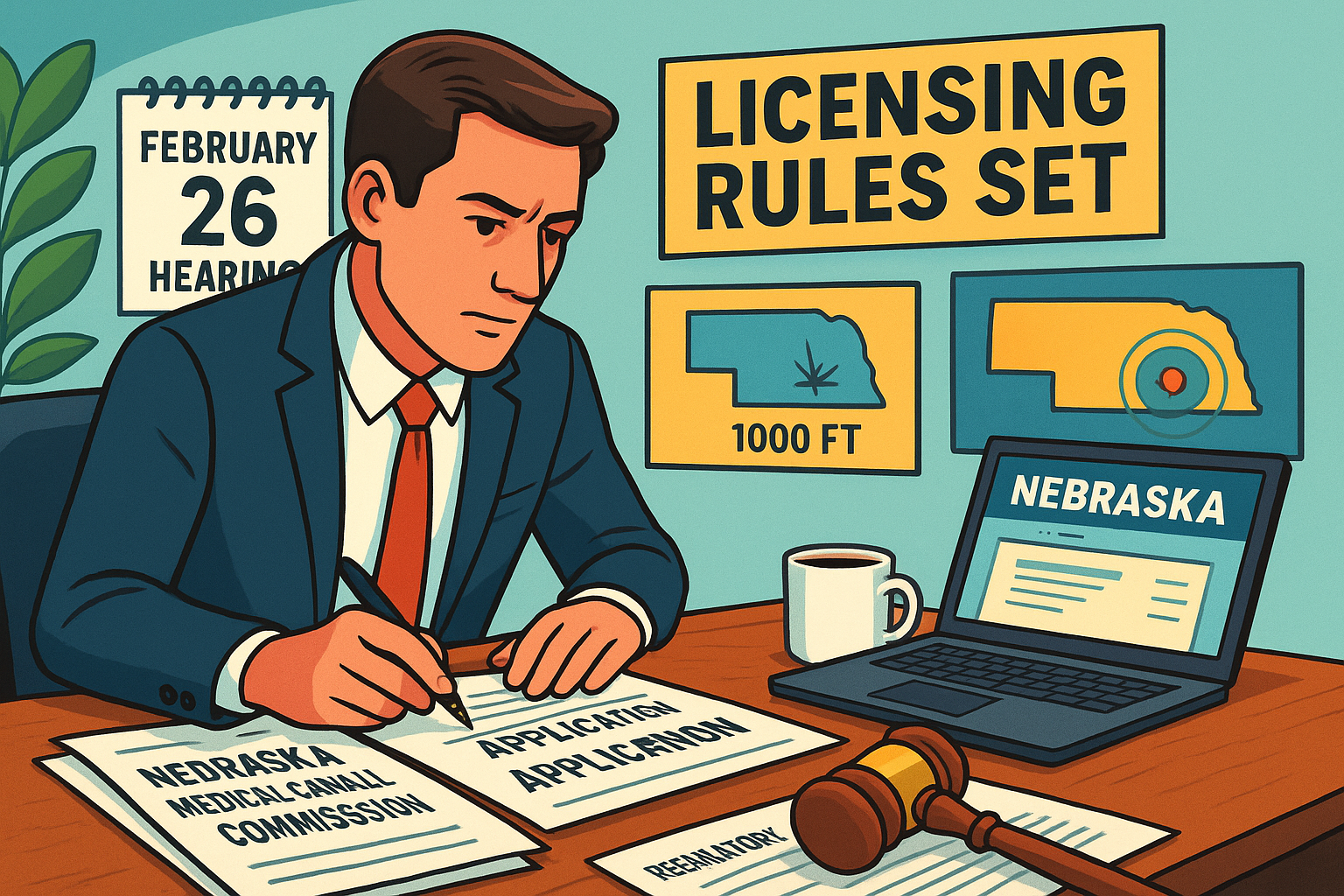
The Nebraska Medical Cannabis Commission scheduled a public hearing for February 26, 2026 (1:00-4:00 PM) on proposed emergency regulations establishing criteria and procedures for dispensary applications. The Commission published draft Title 238, Chapter 1 regulations on January 5, with a second notice posted January 25. Public comments close at 11:59 PM on February 26.
The Impact:
These regulations will define residency requirements (majority Nebraska ownership), business plan standards, facility design specs, and location buffers. The draft includes a lottery system for license allocation when applications exceed available permits. This hearing represents the first formal public input opportunity on the specific mechanics of how Nebraska will license medical dispensaries. Most significantly, the draft bans dispensaries within 1000 feet of schools, daycares, youth centers, and other covered locations, and prohibits raw plant material, smoking/vaping products, flavored items, infused food/drink, and products over 60% THC or 40mg per dose.
The Opportunity:
Retailers planning Nebraska entry should submit written comments before the February 26 deadline addressing buffer feasibility, product restrictions, and lottery mechanics. The Commission’s willingness to adjust these draft rules based on industry input will determine how many viable sites exist statewide and what product mix dispensaries can carry. Pay close attention to whether the final rules allow any flexibility on the 1000-foot buffer or product format bans.
Strategic Angle:
Review the draft regulations now and identify specific provisions that would make your business model unworkable in Nebraska. Submit detailed comments by February 26 with data from other medical markets showing how similar restrictions affected patient access or business viability. Early, substantive input may influence the final framework before it locks in.
🤝 OMAHA TRIBE – FIRST CULTIVATOR LICENSE HEARING SIGNALS EARLY 2026 RETAIL OPENING
The Setup:
The Omaha Tribe Cannabis Commission held its first cultivator license application hearing on January 21, 2026, reviewing applications from Derek Cats and Darren Canby. Tribe Attorney General John Cartier confirmed the Commission is evaluating professionalism, past licensing history, and diversion risk. The tribe expects its first retail store to open in the first half of 2026.
The Impact:
This marks the first formal licensing action under the Omaha Tribe’s Title 51 Cannabis Control Code, which allows adult-use sales on tribal lands. The tribe operates under sovereign jurisdiction separate from Nebraska’s state medical program, creating a parallel retail market accessible to anyone on reservation land. With an early 2026 opening timeline, the Omaha Tribe will likely launch Nebraska’s first legal cannabis retail before the state issues any medical dispensary licenses.
The Opportunity:
The tribal retail launch provides a live case study for Nebraska market demand and consumer behavior before the state program begins. Retailers considering Nebraska should monitor the tribe’s opening closely for insights on pricing, product mix, and customer demographics. If the tribal store draws significant traffic from Omaha metro (about 60 miles south), that signals strong pent-up demand worth capturing with strategic state license applications once windows open.
Strategic Angle:
Connect with Omaha Tribe officials before their early 2026 opening to explore partnership opportunities or supplier relationships. First-mover experience on tribal lands could position your team as a credible operator when Nebraska’s state licensing process begins. Document what works and what doesn’t in the tribal market to refine your state application strategy.
🏛️ LINCOLN – THREE BILLS TARGET COMMISSION GOVERNANCE AND PROGRAM FRAMEWORK
The Setup:
The Nebraska Legislature scheduled hearings on three cannabis-related bills: LB934 (February 9) would make Medical Cannabis Commission seats elected rather than appointed; LB933 provides immunity for healthcare practitioners recommending cannabis; LB1235 (February 23) would transfer provisions of the state’s medical cannabis acts and establish a 5.5% sales tax. All three were introduced January 9 and referred to the General Affairs Committee.
The Impact:
LB1235 directly affects retail economics by setting the tax rate and directing proceeds to property tax relief. The bill also expands the Commission’s regulatory authority over patients, caregivers, practitioners, and testing facilities, plus establishes application fee structures. LB934 would change who controls licensing decisions starting in 2028, potentially shifting policy priorities if elected commissioners replace governor appointees. LB933 removes a barrier to physician participation by protecting practitioners from liability.
The Opportunity:
Retailers should focus on LB1235 because the proposed 5.5% sales tax is lower than many medical markets and the bill codifies the Commission’s authority to set fees and collect fines. If passed, this creates a more predictable regulatory environment for financial planning. The physician immunity bill (LB933) could expand the pool of recommending doctors, increasing patient counts and market size.
Strategic Angle:
Monitor the February 23 LB1235 hearing for testimony on tax rates and fee structures. If the 5.5% rate holds, Nebraska’s tax burden will be competitive with surrounding states. Factor that into pro forma models now so you can move quickly when application windows open. Track whether the governance change (LB934) gains traction because elected commissioners may prioritize different issues than appointees.
🏙️ HASTINGS – PLANNING COMMISSION ADDS CANNABIS TO ZONING CODE REWRITE
The Setup:
The Hastings Planning Commission discussed land use definitions for the city’s zoning code rewrite on January 21, 2026. The draft explicitly includes cannabis dispensaries within “Community Retail, Adult Establishment,” defined as businesses serving clientele over 18 subject to state licensure requirements.
The Impact:
Hastings (population ~25,000) becomes one of the first Nebraska cities to formally integrate cannabis dispensaries into its land use framework. By categorizing dispensaries alongside tattoo parlors, bars, and liquor stores, the city signals it will allow retail once state licensing begins. The zoning maps and permitted use tables are still under discussion, so final district allowances remain uncertain.
The Opportunity:
Hastings represents a mid-sized market in south-central Nebraska with limited existing retail competition. Getting ahead of the zoning approval process here means identifying viable sites before the rush. If the final code allows dispensaries in commercial districts without excessive buffers, Hastings could support 2-3 locations serving Adams County and surrounding areas.
Strategic Angle:
Reach out to Hastings planning staff before the code rewrite finalizes to understand where “Community Retail, Adult Establishment” uses will be permitted. Secure option agreements on sites in those zones now, before state licensing applications open and competition for Hastings locations intensifies. Early site control in a willing jurisdiction beats scrambling later.
The Bottom Line
Nebraska’s cannabis retail framework is taking shape fast. The February 26 state hearing will lock in dispensary licensing procedures, buffer rules, and product restrictions that determine site viability statewide. The Omaha Tribe’s early 2026 retail opening will test market demand months before state licenses issue. Three legislative bills could finalize tax rates, fee structures, and commission governance by spring. Hastings and other municipalities are writing cannabis into zoning codes now. Retailers serious about Nebraska need to submit comments on the draft regulations by February 26, monitor the tribal launch closely, and secure site control in forward-leaning cities like Hastings before application windows open.
📬 Get Monthly Market Updates
Stay ahead of the curve with our monthly cannabis retail market newsletter. New markets, regulatory changes, and expansion opportunities delivered to your inbox.