CO Monthly Puff: Colorado Cannabis Label Study: 14% Pass
Top Headlines This Month
- 📋 Only 14% of products carried every required label
- 📋 Colorado Springs recreational sales hit $3.8 million first year
- 📋 Revised MED marijuana rules took effect November 1
- 📋 Recalls tied to 44 adverse health event reports
The big number this November comes from a Colorado cannabis label study out of CU Boulder, where a secret shopper found that only 14% of 480 products across 52 dispensaries carried every label item the state requires. Concentrates did far better than flower, and a follow-up found dispensary-rolled joints most often came in under their stated THC. Colorado Springs also closed out its first year of recreational sales, and revised state rules took effect November 1.
📋 COLORADO: STUDY FINDS 14% OF DISPENSARY PRODUCTS CARRIED EVERY REQUIRED LABEL
Just 14% of 480 cannabis products bought at 52 Colorado dispensaries carried every label item the state requires, according to a study in the Journal of Cannabis Research from the University of Colorado Boulder’s CUChange lab. Because federal law bars university scientists from handling cannabis directly, the team worked with industry partner MedPharm Holdings, whose secret shopper purchased pre-rolls, loose flower and high-potency concentrates across the state. Concentrates performed far better than flower, with 31% fully compliant compared with 2% of flower. Nearly all products carried the universal THC symbol (99.2%) and driving and pregnancy warnings (97.5%), but fewer than half showed an expiration or best-by date and only about 17% listed required storage conditions. Colorado’s Marijuana Enforcement Division requires a universal THC symbol, driving and pregnancy warnings, an expiration or best-by date, storage conditions and potency information. A follow-up the university reported on November 11 found only about half of 265 flower samples from 59 dispensaries were accurately labeled for THC, and dispensary-rolled joints most often came in under their stated THC. Edibles and medical cannabis were not included.
The follow-up pointed to where the gap is widest. Joints pre-rolled at the dispensary were the most common problem, with 60% containing less THC than stated by about 20% on average, while an earlier study by the same team found 96% of concentrates matched their labels. Senior author Cinnamon Bidwell noted that THC degrades when exposed to light, heat or oxygen, which is why dates and storage instructions matter. The findings cover Colorado’s recreational flower and concentrates only and did not measure whether any consumer was harmed.
Source:
https://www.cannawize.co/cannabis-label-compliance-colorado-study-2026
📋 COLORADO SPRINGS: RECREATIONAL SALES BRING IN $3.8 MILLION IN FIRST YEAR
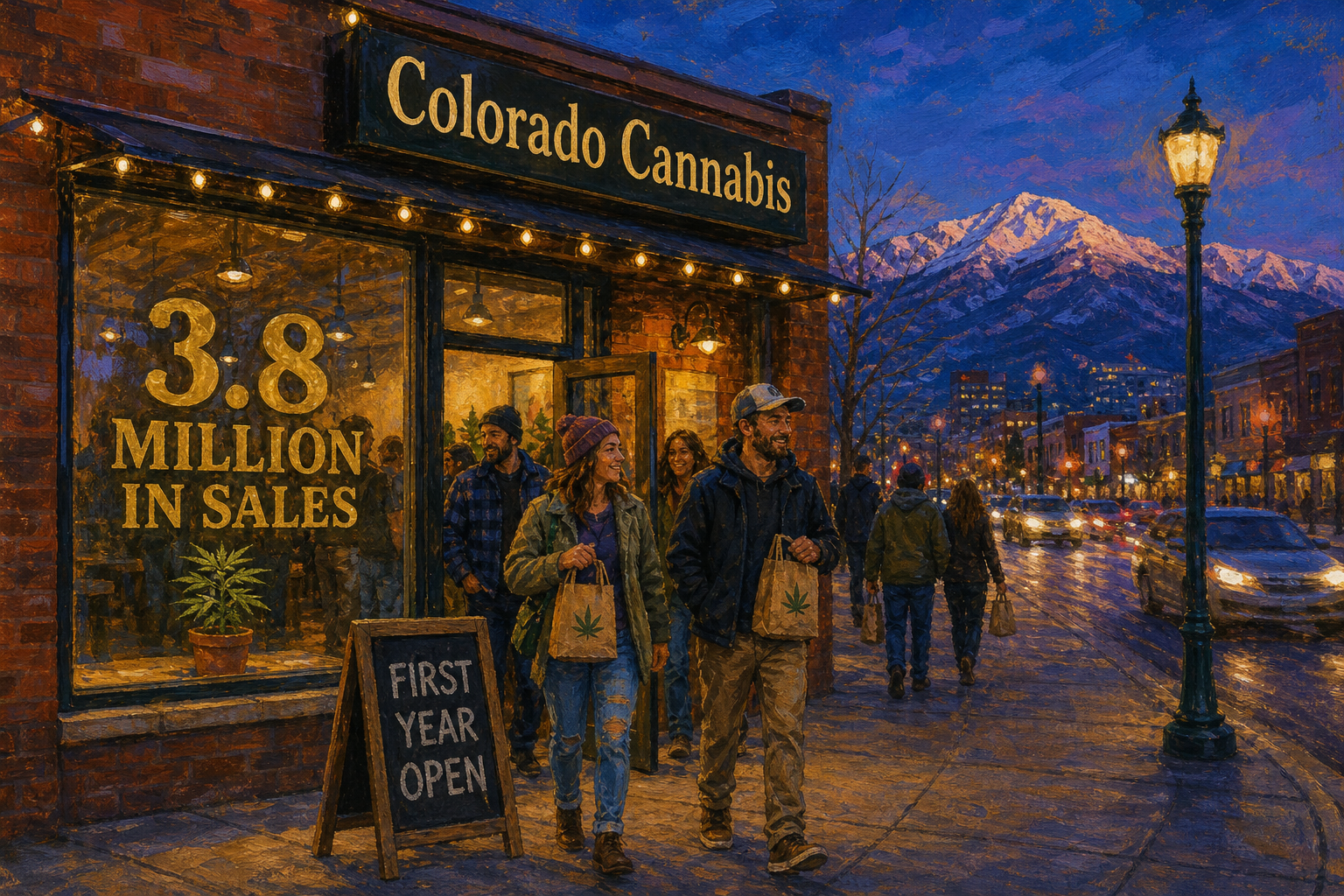
Colorado Springs recreational marijuana sales brought in about $3.8 million in their first year, according to the Colorado Springs Cannabis Association, with roughly $3.5 million of that coming from the city’s special 5% marijuana tax. The city spent about a decade refusing recreational sales before voters approved them on a limited basis in 2024, and the first recreational sales started in April 2025. Only existing medical dispensaries could apply, and the number of recreational locations is capped at the number of medical licenses that existed on Election Day. The 5% tax itself dates to a 2022 voter approval, which also set the rule that the money can only be spent on public safety, mental health services, and PTSD treatment for veterans. The first year total still came in a little shy of the $4 million a year the city had been counting on.
The revenue shows up directly in the proposed 2027 city budget, where marijuana tax money helps pay for $3.9 million in fire equipment and $1.8 million in police technology. For a market built on a small, capped set of converted medical stores, that first year haul sets a baseline for what a restricted retail footprint can generate when a city ties the proceeds to a narrow set of public uses.
Source:
https://johnsonteamworks.com/blog/colorado-springs-2027-budget/
📋 COLORADO: REVISED MED MARIJUANA RULES TAKE EFFECT NOVEMBER 1
Revised marijuana rules adopted by the Colorado State Licensing Authority went into effect on November 1, 2026, the Marijuana Enforcement Division confirmed. The changes come out of the Division’s 2026 summer rulemaking, an annual process in which the Division reviews and recommends rule revisions to keep them consistent with statutory requirements. State law also requires the State Licensing Authority to review application and license fees each year so they reflect the direct and indirect costs of administering the Colorado Marijuana Code, so the new package includes updated fees alongside the rule text. The Division ran stakeholder meetings on July 22 and August 5, held a permanent hearing on August 26, and accepted written comments through an August 26 deadline. The updated rules are published as 1 CCR 212-3, with the Division posting an unofficial copy, a redlined version of the changes, and the adoption order.
The Regulated Marijuana Rules are binding on every licensee, and noncompliance can result in disciplinary action against the license, including fines, suspension, or revocation. That makes the November 1 effective date the point at which Colorado dispensaries and other license holders are measured against the revised standards and fee schedule rather than the prior version.
Source:
https://med.colorado.gov/rules
📋 COLORADO: MED RECALLS TIED TO 44 ADVERSE HEALTH EVENT REPORTS
Colorado’s Marijuana Enforcement Division issued recalls on October 23 and October 27 covering five batches of cannabis products found to contain unsafe amounts of banned solvents, pesticides and mold, Westword reported. The recalls affected 69 dispensaries, with most of the stores in the Denver area. A batch of vaporizers produced and distributed by Colorado’s Best Dabs was pulled because the products contained methyl ethyl ketone, a solvent that can cause neurological, liver, respiratory and kidney harm when inhaled. Four separate batches from The Health Center were recalled for contamination, including products that contained mold and pesticides. Colorado’s cannabis industry has been hit with 29 safety advisories so far this year. A state auditor’s report released in September found that over 75% of Colorado cannabis products went untested for pesticides and other dangerous contaminants.
MED told the Daily Caller News Foundation that as of October 29 it had received 44 reports of adverse health events related to StayCon or Craft products, which were recalled in late September for containing methylene chloride. Colorado, which brought in $236 million in cannabis tax revenue in 2025, saw the recalls concentrated in and around Denver.
The Bottom Line
Compliance and safety ran through the Colorado cannabis market this November, from a CU Boulder label study where just 14% of products passed every requirement to recalls tied to 44 adverse health event reports. Colorado Springs reported about $3.8 million from its first year of recreational sales, and revised state marijuana rules took effect November 1.
📬 The CannDev Monthly Puff Newsletter
Stay ahead of the curve with our monthly cannabis retail market newsletter. New markets, regulatory changes, and expansion opportunities delivered to your inbox.