
NE Monthly Puff: Fee Structure Set, Patients Push for Faster Access
Nebraska cannabis licensing fees came into sharper focus this month as the Medical Cannabis Commission approved a full fee schedule and continued building out the framework needed to serve patients. Public support for legalization keeps climbing, families are pressing for faster access, and Hastings is drafting the first zoning rules that will define where dispensaries can actually operate. August is shaping up to be a pivotal stretch, with the commission’s August 17 meeting on the calendar and product manufacturer applications due the same day.
Top headlines this month
- UNL survey shows 47% support full cannabis legalization
- Families urge faster patient access as rules advance
- Commission approves fee structure for cultivators, dispensaries, manufacturers
- Hastings drafts zoning classification for cannabis dispensaries
Nebraska: UNL Survey Shows Growing Public Support for Cannabis Legalization
A 2026 survey from the University of Nebraska-Lincoln’s Rural Drug Addiction Research Center found that 47% of Nebraska adults support legalizing cannabis for both medical and recreational use, up from 44% in 2024. Support for medical cannabis specifically reached 84% in 2026, compared to 80% in 2024. Nebraska voters approved a medical cannabis initiative in November 2024 with 71% support, and the state has since moved forward with cultivator licensing and permanent regulations. The survey also tracked out-of-state purchase behavior: 15% of Nebraskans reported buying cannabis legally out of state in 2026, compared to 11% in 2024, with neighboring states Colorado and Missouri both operating legal recreational markets. Geographic support differs significantly by area, with 54% of adults in metropolitan areas including Omaha, Lincoln, Grand Island, and Sioux City supporting both medical and recreational legalization, versus 35% in micropolitan areas and 32% in all other counties. The out-of-state purchase figures illustrate the demand that Nebraska’s emerging medical market will eventually serve once dispensaries open. With no operating medical market and no recreational market on the horizon, a growing share of interested consumers are crossing state lines to buy legally. Patrick Habecker, co-author of the report, noted that Nebraska is in an unusual position where neither a recreational nor an operational medical market currently exists, though farm bill loophole dispensaries continue to operate, leaving open questions about how consumer behavior shifts once the regulatory picture changes.
Source:
https://news.unl.edu/article/report-nebraskans-support-of-legal-cannabis-is-growing
Nebraska: Families Urge Faster Patient Access as Medical Cannabis Commission Advances Rules
The Nebraska Medical Cannabis Commission’s most recent meeting, its first since permanent rules and regulations were approved, drew residents urging faster progress to get medicine to patients. Marcie Reed told commissioners that children who qualify for medical cannabis still cannot access it because no providers will write recommendations for them. Interim Commission Chair Lorelle Mueting described building the commission as much like constructing a house, explaining that staffing, budgeting, seed-to-sale tracking, and license processing systems all have to be in place before patients can be served. The commission voted on a draft rule that places responsibility for transporting medical cannabis products on product manufacturers. On the cultivation side, Kent Rogert, a licensed cultivator, told commissioners that county officials have provided a path for him to apply for a conditional use permit and building permits, a development that came after planning officials previously declined to issue him an agricultural permit. The gap between public expectations and the current program pace is generating visible public pressure on the commission. Patients approved under the state’s medical cannabis law have no in-state supply to access. The commission’s August 17 meeting is the next scheduled gathering, with legal counsel set to review the rules and regulations beforehand.
Nebraska: Medical Cannabis Commission Approves Fee Structure for Licensed Establishments
The Nebraska Medical Cannabis Commission voted 3-0 at its July meeting to approve a fee structure for cannabis applicants and licensees, pending review by the commission’s newly hired in-house legal counsel. All applicants will pay a $5,000 application fee. Initial license fees are set at $20,000 for cultivators, $20,000 for product manufacturers, and $15,000 for dispensaries. Annual renewal fees are $23,500 for cultivators, $18,000 for dispensaries, and $23,500 to $28,500 for product manufacturers depending on whether they carry a transporter certification. A transporter certification costs $10,000. All licensees also pay a $13,000 annual fee to participate in the state’s seed-to-sale tracking system, bringing total annual carrying costs to at least $30,000 to more than $40,000 per year. Commission rules cap participation at four cultivators, four product manufacturers, and 12 dispensaries distributed across judicial districts. All four cultivator slots are filled, with one cultivator approved to begin growing. The product manufacturer application window was extended to August 17, with at least two applications submitted as of the July meeting. The fee approval gives the commission a revenue path to continue staffing up, but timelines for first dispensary and product manufacturer licenses remain uncertain. First product manufacturer approvals are not expected before September at the earliest, based on the monthly meeting schedule, and the commission has not indicated when it will begin licensing dispensaries.
Hastings: City Proposes Zoning Classification for Cannabis Dispensaries
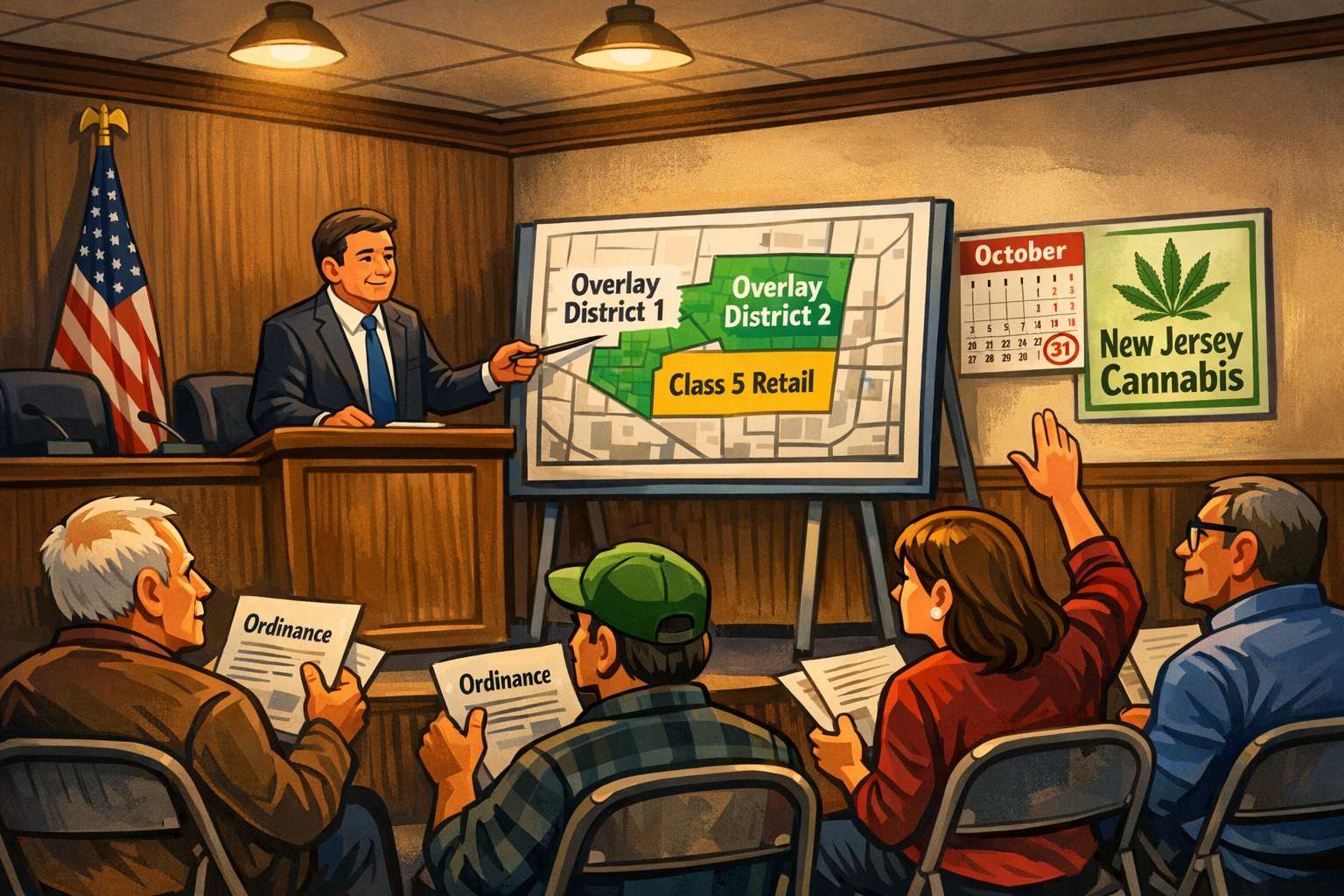
The City of Hastings held a public meeting on July 23 at Hastings Public Library, 314 N. Denver Ave., to gather feedback on proposed zoning changes that would define how cannabis dispensaries are regulated locally. Under the proposed definitions, cannabis dispensaries fall under a retail adult establishment category alongside tattoo parlors, bars, and liquor stores, covering businesses that sell products or services to customers over 18. A separate assembly adult establishment category covers adult bookstores, adult movie theatres, and adult cabarets. The city’s existing code lists adult establishments only as a conditional use permit category but designates no zoning districts where that permit can actually be issued, leaving the framework without a functional basis. The meeting is part of a broader rewrite of the Hastings Municipal Code covering zoning. The Development Services Department will use public input from July 23 to draft updated codes that must comply with state and federal court decisions prohibiting the complete exclusion of adult establishments from a community. Hastings is working through a classification process that will determine which parts of the city are eligible for dispensary siting. The zoning framework Hastings adopts will be the local structure in place when state dispensary licensing moves forward.
Source:
https://www.centralnebraskatoday.com/2026/07/10/414079/
The bottom line
Nebraska cannabis licensing fees are now defined, all four cultivator slots are filled, and product manufacturer applications close August 17. Public support for legalization continues to grow while patients still wait for in-state supply, and cities like Hastings are only beginning to define where dispensaries can locate.
📬 Get Monthly Market Updates
Stay ahead of the curve with our monthly cannabis retail market newsletter. New markets, regulatory changes, and expansion opportunities delivered to your inbox.