
MI Monthly Puff: Eastpointe Settles, CRA Rules Hearing, DEA Inspections Begin
Michigan cannabis retail July 2026 is defined by legal wins, rulemaking, and federal footprints on state-licensed floors. A court-approved settlement clears a second dispensary for Eastpointe, the Cannabis Regulatory Agency locks in a July 23 hearing on proposed rules, and House Bill 6163 lands in committee with changes touching waste disposal and transporter crews. Meanwhile, DEA agents have begun on-site inspections at state-licensed shops applying for federal registration under rescheduling.
Top Headlines This Month
- Common Citizen wins Eastpointe dispensary permit via settlement.
- CRA sets July 23 second public hearing on rules.
- House Bill 6163 proposes medical marihuana licensing changes.
- CRA files dual complaints against Bangor adult-use licensee.
- DEA begins on-site inspections at state-licensed cannabis shops.
EASTPOINTE: COMMON CITIZEN WINS DISPENSARY PERMIT THROUGH COURT SETTLEMENT
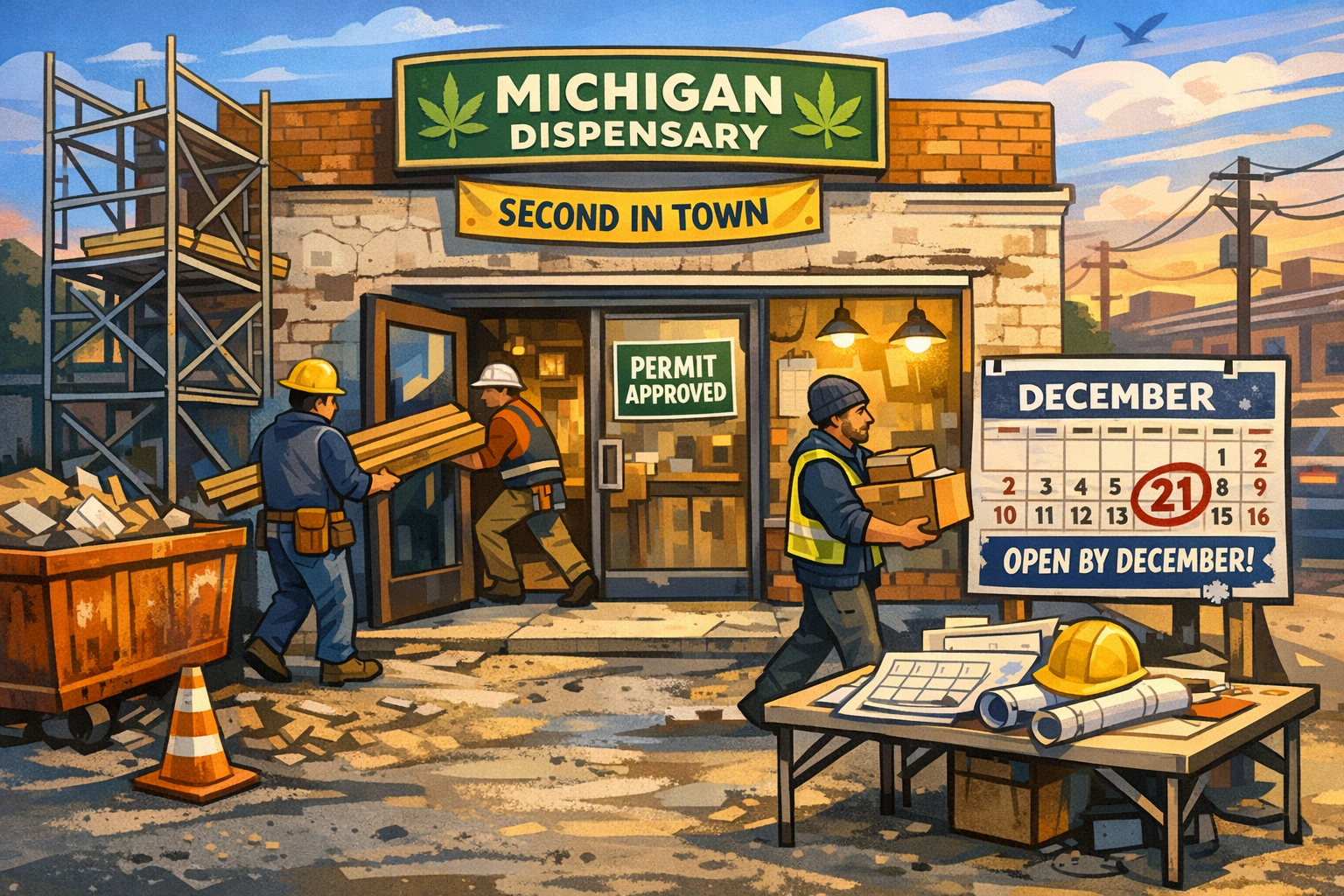
MPM-R X LLC, reportedly the parent company of Common Citizen, reached a settlement with the city of Eastpointe that Macomb County Circuit Judge James Maceroni approved in May 2026. The agreement followed a lawsuit Common Citizen filed after the city denied a special-land-use permit for a site on Gratiot Avenue north of Stephens Road. Under the deal, Common Citizen gained permission to operate and must open the dispensary by December 1, 2026, while committing to refurbish the building and comply with all city provisioning center and medical marijuana facility requirements. Common Citizen, which operates a handful of retail dispensaries in Michigan, had a scaled-down renovation plan rejected by the city in June 2025 before filing suit. The new location will be Eastpointe’s second dispensary, following Moses Roses, which opened in December 2025 on Eight Mile Road. The settlement resolves a municipal permitting dispute but drops Common Citizen into a market under significant cost pressure. Michigan added a 24% wholesale tax on cannabis suppliers beginning January 1, 2026, on top of an existing 10% excise tax and 6% sales tax. With more than 800 cannabis retail stores operating in Michigan and selling about $3 billion annually, the combined tax burden and ongoing oversupply conditions will likely lead to accelerated consolidation across the state, experts say.
MICHIGAN: CRA SETS JULY 23 DATE FOR SECOND PUBLIC HEARING ON MARIHUANA ADMINISTRATIVE RULES
The Cannabis Regulatory Agency has scheduled a second public hearing on proposed rule set 2023-25 LR for Thursday, July 23, 2026, beginning at 9:00 AM. The hearing will be held at the CRA building at 2407 N Grand River Ave in Lansing, with attendees entering through the south entrance. Comments can be submitted in person at the hearing, through a Zoom virtual connection, or by email. Draft rule language and all supporting documents are available on the agency’s public hearing webpage. The July 23 hearing gives Michigan licensees, applicants, and other stakeholders a direct channel to submit comments before the CRA finalizes the rule set. Anyone who wants input on the record has a concrete deadline to work toward, and the agency’s acceptance of virtual and written comments makes participation accessible beyond those who can attend in person.
MICHIGAN: HOUSE BILL 6163 PROPOSES AMENDMENTS TO MEDICAL MARIHUANA FACILITIES LICENSING ACT
House Bill 6163, introduced July 3, 2026, by 19 House representatives and referred to the Committee on Regulatory Reform, proposes amendments to Michigan’s Medical Marihuana Facilities Licensing Act. The bill modifies several existing sections and adds a new section 202 that establishes legal protections for marihuana disposers, a license category focused on plant waste disposal. One notable provision bars the Cannabis Regulatory Agency from promulgating rules that require marihuana facilities to combine plant waste with other products or render it unusable or unrecognizable. The bill also extends protections that currently apply to licensees and their landlords, including shields from criminal and civil prosecution and asset seizure, to cover marihuana disposers and the financial institutions and accountants serving them. Secure transporter vehicles would be required to operate with a two-person crew, with at least one person remaining with the vehicle throughout transport. The bill includes an enacting clause conditioning its effect on passage of a companion measure, so the passage of that companion measure would allow these changes to take effect. The proposal touches multiple license types across the supply chain, with the waste disposal and transporter crew provisions representing the most direct operational changes for facilities currently active under the medical marihuana framework.
Source:
https://www.legislature.mi.gov/documents/2025-2026/billintroduced/House/pdf/2026-HIB-6163.pdf
BANGOR: CRA FILES DUAL FORMAL COMPLAINTS AGAINST GROUND CONTROL MICHIGAN ADULT-USE LICENSE
The Cannabis Regulatory Agency has filed a First Superseding Formal Complaint and a separate new Formal Complaint against the adult-use license of Ground Control Michigan, LLC, doing business as GCM Waypoint, at 54341 M43 Hwy in Bangor. The First Superseding Formal Complaint, filed under Enforcement Action ENF 26-00131, replaces a previously issued complaint and includes an additional count. A second complaint, filed under Enforcement Action ENF 26-00320, alleges separate conduct not covered by the first action. The CRA holds authority under the Michigan Regulation and Taxation of Marihuana Act to investigate alleged violations and impose disciplinary action, including fines and other sanctions. Ground Control Michigan holds adult-use license No. AU-P-000154. The CRA has stated its intent to impose fines and other sanctions, which may include suspension, revocation, restriction, or refusal to renew the license. The dual-complaint structure, with one superseding a prior filing and a second addressing distinct conduct, addresses conduct across two separate enforcement actions. As with all formal complaints, the statements in these filings are allegations.
FEDERAL: DEA BEGINS ON-SITE INSPECTIONS AT STATE-LICENSED CANNABIS BUSINESSES UNDER RESCHEDULING
The Drug Enforcement Administration has begun on-site inspections at state-licensed cannabis businesses that applied to register for federal protections under the Trump administration’s rescheduling move. One dispensary that received a visit reported a six-hour inspection, describing DEA agents as very cordial and not overbearing, with agents acknowledging they are new to this whole process too and approaching it with a collaborative attitude. Separately, the U.S. Supreme Court ruled that the federal government cannot automatically strip gun rights from a person based solely on regular marijuana use. The decision in U.S. v. Hemani was unanimous in outcome, though two justices concurred only in the judgment, and the ruling was narrow and applied to the specific facts rather than striking down the underlying federal statute. A new report from Vangst and Whitney Economics shows U.S. legal marijuana sales declined for the first time in 2025 amid price compression and oversupply, though it projects the trend could reverse as federal rescheduling potentially creates new opportunities for businesses. For Michigan licensees, the DEA inspection activity signals that federal registration under rescheduling is moving from proposal to active process. A Marijuana Policy Project analysis found states have generated more than $28 billion in recreational cannabis tax revenue since their markets launched, with some states now generating more revenue from legal marijuana than from alcohol. The Supreme Court gun ruling adds a further dimension to the shifting federal policy environment surrounding cannabis consumers.
The Bottom Line
Michigan cannabis retail in July 2026 is moving on three fronts at once: local permitting fights are resolving through the courts, the CRA is advancing rulemaking and enforcement in parallel, and federal rescheduling is showing up as actual DEA visits to Michigan-licensed stores. The 24% wholesale tax and roughly 800 stores selling about $3 billion annually remain the backdrop shaping every one of these moves.
📬 Get Monthly Market Updates
Stay ahead of the curve with our monthly cannabis retail market newsletter. New markets, regulatory changes, and expansion opportunities delivered to your inbox.